

TUM.aiSchloss Elmau

AI Edutainment

Program

A five-day AI journey for all ages

Built for ages 8-18, the course is modular and adapts to the speed, curiosity, and eagerness each child brings. Nobody gets left behind, faster students can keep exploring, and fun stays the most important part. Each step adds outcomes to the private portal, so students can revisit and download what they made.

Large AI letters on a pink background
Day 1

Explore AI

Students start by discovering what artificial intelligence can already do and where human ideas still matter most. They try playful experiments, compare surprising results, and learn how to talk to AI tools with confidence. The pace stays flexible, so curious students can go deeper while beginners get the support they need. Everyone leaves day one with a clearer feeling for AI and a first spark of creative momentum.
Close-up of code on a screen
Day 2

Hacking With AI

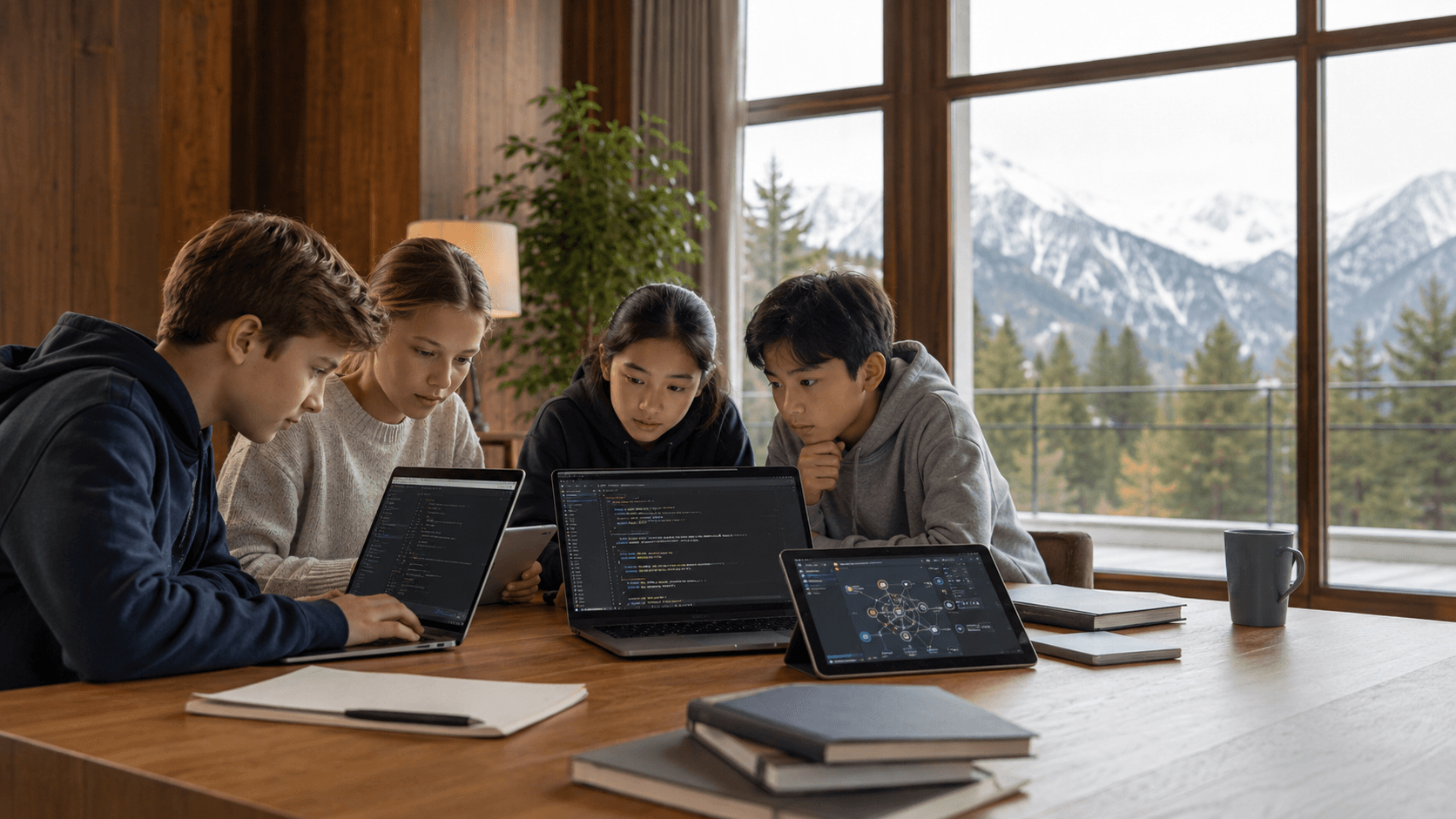
Students learn how to use AI as a practical helper for solving problems, testing ideas, and understanding generated code. They experiment with prompts, inspect AI suggestions, and see how fast they can move when they ask better questions. The course adapts to each child's speed, so nobody gets pushed too far or held back. The goal is to make technical work feel exciting, approachable, and fun.

Students presenting a self-built video game in a mountain workshop room
Day 3

Debate AI & Build a Game

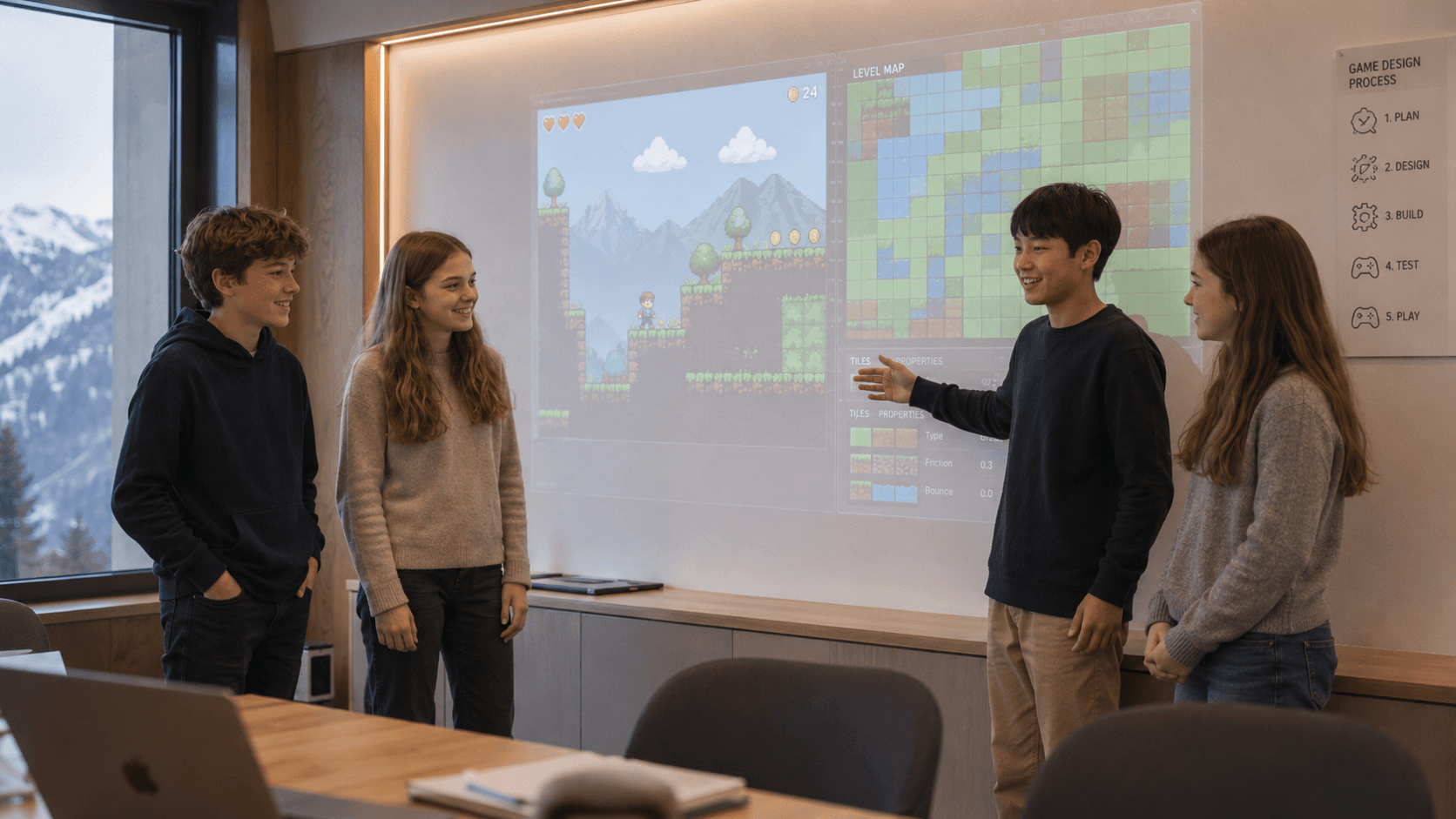
Students debate what AI should and should not do, then turn that critical thinking into a hands-on video game project. They design mechanics, shape a small world, and guide AI-generated code while still making the creative decisions. Eager students can add more features, while others can focus on a polished simple version. By the end, the emphasis is on ownership, confidence, and the joy of building something playable.

Students building a web project together at a table in the mountains
Day 4

Build Your Own Website

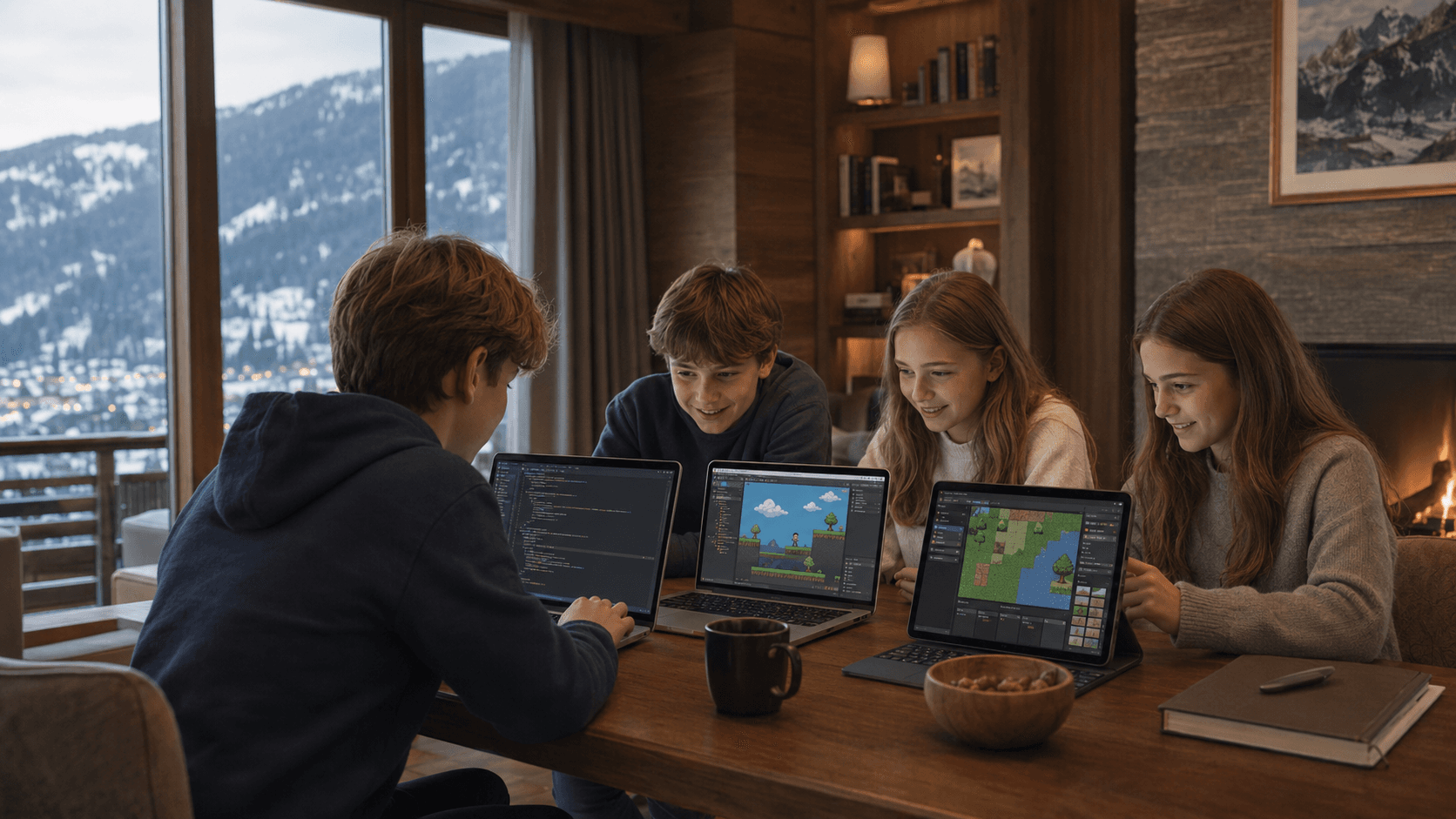
Students bring their ideas onto the web by combining text, images, layout, and AI-generated code into their own website. They learn how pages are structured, how design choices change the feeling of a project, and how AI can help without taking over. The work stays modular, so each child can build at the level that fits their confidence and curiosity. The result is a personal web project they can keep improving.

Students presenting a game project to the group
Day 5

Present What You Built

Students polish their favorite outcomes and decide what they would like to share. If they are proud of a game, website, image, or story, we help them prepare a small showcase for their parents. They practice explaining what they learned, what they built, and where they want to go next. The final day celebrates progress, fun, and the confidence each child gained at their own pace.

Open the private portal